

 PL
 EN
 DE
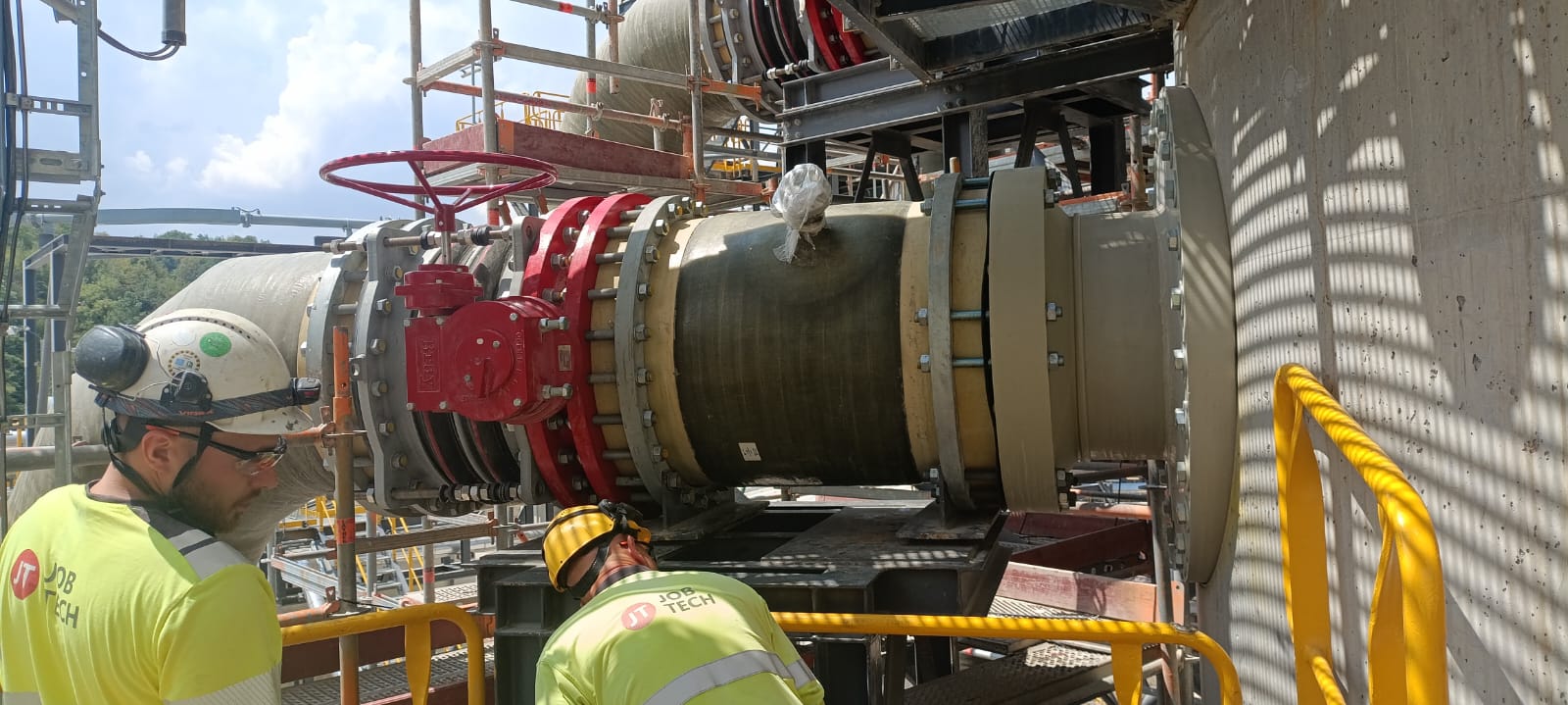
Hot Tapping of Pipelines: New Connections Without a Shutdown
Hot tapping on operating industrial pipelines: the engineering checks before the first cut, the tapping sequence on site, safety and QA/QC requirements, and the role of the method in commissioning and international projects.

Hot tapping makes it possible to create a new branch connection on an operating pipeline without shutting down and depressurising the whole system. In industrial plants, where even a short production stop has a measurable effect on cost and schedule, it is often the only realistic alternative to waiting for the next planned turnaround.
For JobTech, hot tapping belongs to the same scope as the mechanical works, pressure testing and commissioning support we deliver for equipment manufacturers, EPC contractors and plant operators in Poland and abroad. On international projects it is most useful where modifications have to be completed within tight time windows and under the client’s HSE, QA/QC and documentation requirements.
What hot tapping is and when it replaces a shutdown
Hot tapping is a controlled method of making an opening in an existing pipeline, vessel or process component while it remains in service and under pressure. A branch fitting is attached to the line, a full-bore isolation valve is bolted to it and a tapping machine is mounted on the valve. The cutter passes through the open valve and removes a disc of the pipe wall, known as the coupon. The cutter and coupon are then retracted, the valve is closed and the machine removed, leaving an isolated branch ready for the next stage of work.
A conventional modification takes a longer route. The line has to be isolated, depressurised, drained and often flushed or purged before anyone can cut into it, and afterwards it must be refilled, retested and returned to service. Hot tapping removes most of that interruption. Typical uses include new process branches and bypasses, connections for additional equipment, new drain, vent and instrument points, and access for line stopping, where a plugging head is inserted through the tapped opening to isolate a section of the line temporarily.
Engineering checks before the first cut
Hot tapping is not simply drilling into a pressurised pipe. The pipe wall stays a live pressure boundary throughout the job, so the installation is first verified against its actual condition, not only against drawings.
Wall thickness comes first. Local corrosion, erosion or old damage can make a theoretically suitable location unacceptable, so the remaining wall is confirmed by ultrasonic measurement over the whole area of the weld and the cut. The process medium matters just as much: some media decompose or become flammable when heated, others embrittle steel at the weld.
Where the fitting is welded to a live pipe, the flowing medium draws heat away from the weld. Excessive heat input risks burning through the wall; cooling that is too rapid produces hard microstructures prone to cracking. The welding procedure must therefore be qualified for in-service conditions, for example under API 1104 Annex B for pipelines. API RP 2201 remains the common reference for safe hot tapping practice in refining and petrochemical plants.
| Check | Why it matters | Typical method |
|---|---|---|
| Actual wall thickness | Burn-through risk, fitting design | Ultrasonic thickness mapping at the tapping point |
| Pipe material and condition | Weldability, cracking susceptibility | Material records, hardness or PMI where required |
| Process medium | Reactivity, flammability, embrittlement | Process data review with operations |
| Pressure, temperature, flow | Heat removal during welding, cutter loads | Operating window agreed for the duration of the work |
| Fitting, valve and machine rating | Integrity of the pressure boundary | Certificates, design check, pressure test of the assembly |
| Working space and access | Machine length, safe cutter travel | Site survey and clearance measurement |
The hot tapping sequence on site
After the site survey, the branch fitting is installed, either as a welded nozzle for smaller connections or as a full-encirclement split tee where the branch is large relative to the run pipe. The isolation valve follows, and the fitting and valve assembly is pressure tested before the existing wall is touched.
The tapping machine is then mounted on the valve and cutter travel is set and confirmed, so that the cutter clears the valve gate after retraction. With the valve open, a pilot drill enters first and centres the cutter; it usually carries a retention device that holds the coupon once the cut is complete. When the wall has been penetrated, cutter and coupon are withdrawn, the valve is closed and the machine is bled down and removed. Coupon recovery is confirmed and recorded, because a coupon left in the line becomes a loose part travelling towards downstream equipment.
Safety and QA/QC documentation
What separates hot tapping from ordinary piping work is that the existing pressure boundary stays live from start to finish. Execution depends on close coordination between operations, the mechanical team, welders, inspection and HSE. Pressure, temperature and flow must stay within the agreed window for the whole job, and the permit-to-work defines who may stop the operation and under what conditions.
The documentation package is part of the deliverable: thickness and material verification, welding procedures and welder qualifications, equipment certificates, inspection and test records, permits and confirmation of coupon recovery, closed by the final QA/QC dossier. On international projects, this traceability is what allows the work to be accepted under the procedures of the EPC contractor, technology supplier or end client.
Hot tapping in commissioning and brownfield projects
Hot tapping increasingly supports brownfield expansions and phased commissioning. New units often have to be tied into infrastructure that is already running, and where engineering conditions allow, the tie-in point can be created while the existing plant stays online.
The tap itself is only one step. Welding, valve installation, pressure and leak testing and reinstatement have to be coordinated with the commissioning team, so that the new branch is handed over in the right sequence, ready for flushing, functional testing and start-up.
JobTech support for international projects
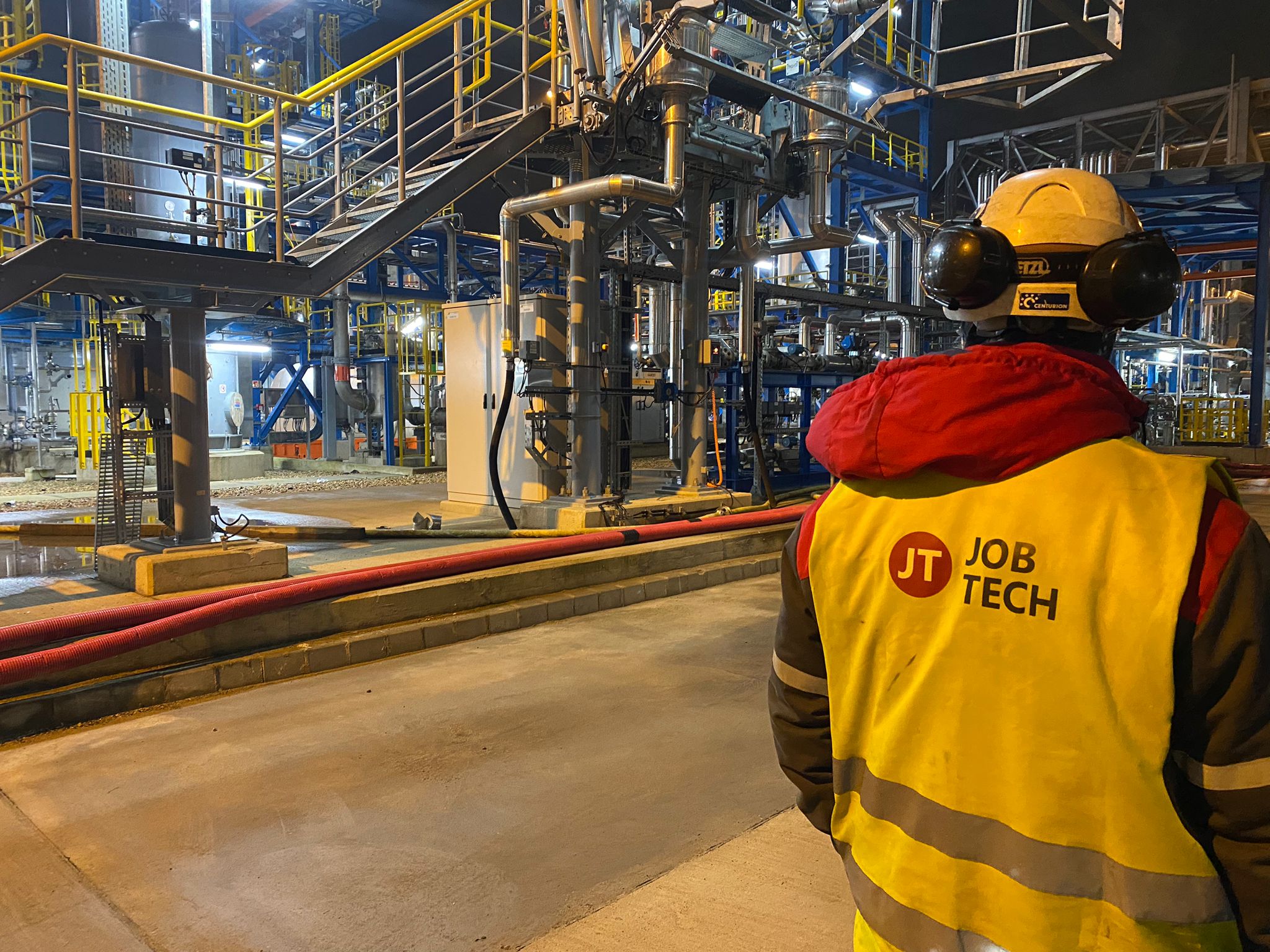
JobTech carries out hot tapping and other on-stream mechanical works on industrial installations in Poland and abroad. Our scope covers site verification, work preparation, welding, inspection coordination, pressure and leak testing, and completion documentation in line with EN and ASME requirements.
For foreign equipment manufacturers and EPC contractors, a local execution team simplifies delivery. The technology, process data and acceptance criteria stay with the client. Qualified personnel, equipment and site execution in line with local regulations, HSE rules and QA/QC standards are on our side, including on projects with short shutdown or start-up windows.
Do you need a connection without shutting down the installation?
Hot tapping is worth considering whenever a new branch or modification has to be made on an operating pipeline and a conventional shutdown would cause disproportionate process disruption. If you are planning a pipeline modification or plant expansion, our team can review the case and prepare an execution concept adapted to your project requirements.

Have questions about industrial installations?
Contact our team — we will be happy to discuss your project requirements and propose the optimal solution.
Get in toucharrow_forward